
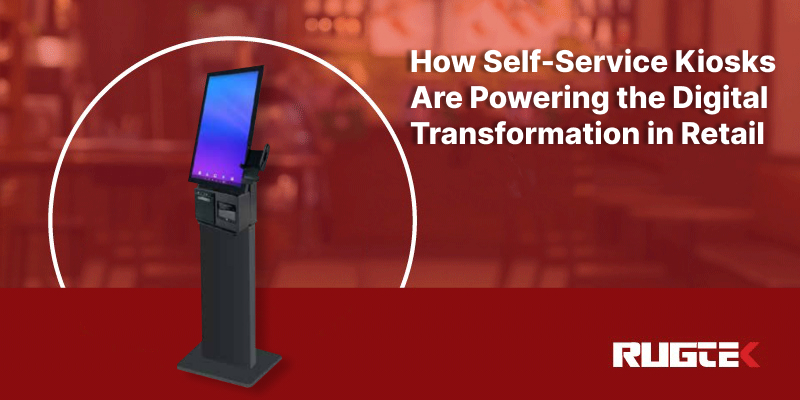
The retail sector is changing at an unprecedented pace. With technology altering the way people make purchases, the self-service kiosks have become one of the main pillars in the retail industry’s digital transformation. They are not only replacing cashiers and making checkout faster, but also providing product recommendations based on customer preferences and thus, engaging customers more than ever before — connecting the physical and the digital realms of retail through a seamless experience.
Evolving Toward Intelligent, Tech-Oriented Retail
Consumers of today demand convenience, speed, and the personal touch. Though past retail models were very efficient in their time they can’t compete with the new demands that have arisen. Smart retail kiosks are thus the solution. They allow the customer to navigate through the products available, compare prices and even make the purchases all by themselves, thus turning retail outlets into tech-oriented customer-friendly spaces.
Kiosks are present in every retail sector be it grocers, fashion or electronics and they enable the brand to offer the same digital ease to the customer who visits the store as to the one who shops online.
The Future of Retail is Self-Service
The key reason for the popularity of self-service kiosks is that they can make the customer experience better and the operation more efficient at the same time. The kiosks smooth out the whole shopping journey by doing all these things: making fewer queues, less reliance on staff, and quicker transactions.
1. Checkouts that are Faster and Smarter
The presence of long lines at the checkout can discourage customers from buying. The self-service checkout kiosks eliminate this problem as they let the customers to scan, pay, and go — saving waiting time considerably. The retailers also enjoy the advantages of having fewer staff requirements and the transactions being more accurate.
2. Customer Engagement Enhanced
The smart retail kiosks are very different from the traditional counters as they have amazing dynamic and interactive interfaces. They can provide product information, recommend similar items, or give loyalty discounts — thus turning a trivial purchase into an interesting digital interaction. This kind of interaction helps in establishing a better relationship with the customers.
3. The Availability of 24/7
Kiosks in this era of comfort can work all day and night. Stores and shopping malls usually set up the kiosks for customers’ information, ticketing, or ordering even during hours when the store is closed. This allows the retailers to serve customers without incurring additional manpower costs.
4. A Valuable Data Insights with Real-Time
Whenever a customer interacts with a kiosk, valuable data is generated — from browsing patterns to purchase history. The retailers can, for example, use these insights to observe customer preferences, optimize product placement, and plan future marketing campaigns.
5. Cost Efficiency and ROI
Despite being a big upfront investment, kiosks will ultimately produce long-term savings by reducing the number of employees needed, cutting down on the errors, and increasing the volume of transactions. They will also yield definitely measurable ROI through enhanced customer satisfaction and the corresponding repeat purchases.
Smart Retail Kiosks: The Best of Both Worlds Shopping
The greatest hurdle that retail faces nowadays is the unification of online and offline shopping experiences. Customers might check the net and then go to the store to buy or do the other way around. Smart retail kiosks alleviate this problem and at the same time make in-store experience more digital-oriented.
To illustrate:
– Supermarket and grocery store chain physical location with no stock of certain items could allow its customers to view a catalog of items available only online and place an order.
– Customers can collect their online orders from physical locations without any extra hassle.
– No more being stuck at the counter waiting for the representative to finish attending to other customers; through interactive displays, the customers can learn about the product features.
They can interact the one with who the other not, phygital being the term that is often used to describe this mingling. And kiosk is one of the keyways to keep the brand experience uniform among all customer interaction points.
Universal Employment of Self-Service Kiosks
Self-service technology versatility triumphed in kiosk usage across all retail segments:
Supermarkets and Grocery Stores: Customers may be self-checked out through quick self-checkout kiosks, thus lessening the number of shoppers in line and increasing the checkout speed.
Fashion and Apparel: Digital fitting room kiosks allow customers to see styles, check stock, and find out what sizes and colo urs are available.
Electronics Retail: Smart kiosks assist with product comparisons and instant specifications so that the buyer is informed.
Quick Service Restaurants (QSRs): Order kiosks shorten the time customers spend in line and verify that their orders are correct.
Convenience Stores: Small kiosks can take care of bill payments, mobile recharges, and product orders.
Because the application ranges so wide, there is no doubt that kiosks are at the heart of the digital transformation strategies of global retailers.
Rugtek's Contribution to Retail Automation
Rugtek being the top brand for point of sale and self-service technology lifetime new kiosk solution to the retail difficulties.
Rugtek self-service kiosks are the new order of the day combining three perfect attributes— durability, speed, and brilliant integration— retailers are enabled to automate customer interaction while still engage them with great brand experiences.
Kiosks by Rugtek are designed with technology for performance and service reliability. Rugtek kiosks have been installed to occupy spaces in large supermarkets, retail chains, and QSRs where suppliers strive to offer customers high satisfaction and efficiency in their operations at the same time.
The Future Is Very Bright for Retail Kiosks
Innovations like AI-driven recommendations, facial recognition for personalized greetings, and IoT integration for real-time inventory updates are just some of the bright and great things that are coming on the way of smart retail kiosks. The innovations will also bring the lighting of digital and physical retail sill more faint.
Brands that early on adopt kiosk technology will be the ones to enjoy the biggest share of the market that retailers’ customers will end up having as a result of the ongoing trend to use technology in the redefining of customers’ relations with brands.
